
Digital Marketing Tools: The Ultimate Guide to Boosting Online Success
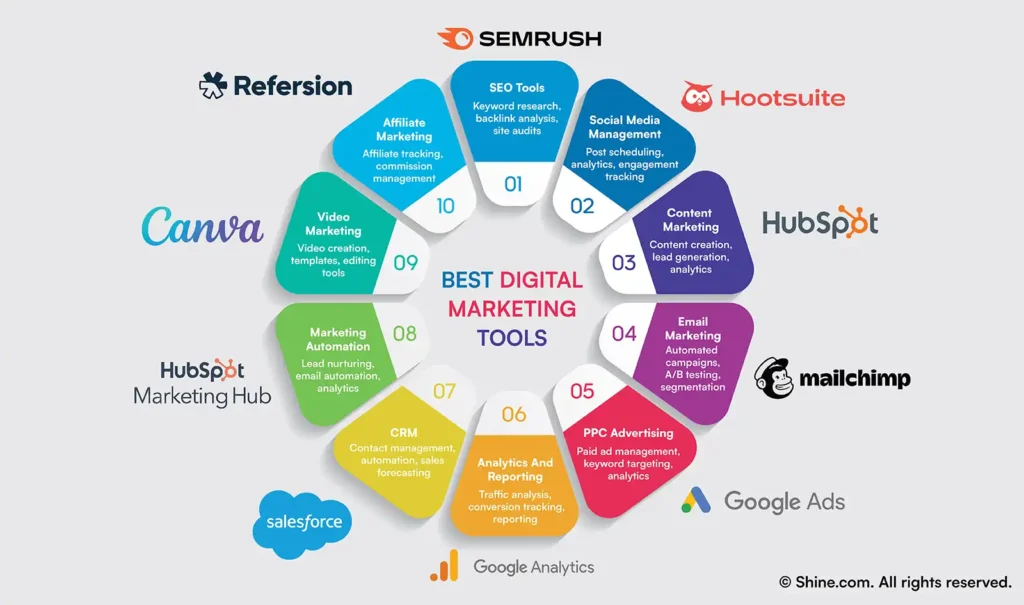
In today’s competitive online world, digital marketing is no longer optional—it’s a necessity. Businesses need to attract, engage, and retain customers across multiple platforms. However, managing campaigns manually can be overwhelming. This is where digital marketing tools come into play. These tools streamline processes, save time, and provide valuable insights to improve performance.
From SEO and social media to email and analytics, the right tools can transform the way businesses approach marketing. Let’s explore why digital marketing tools are important and which ones are essential for success
Why Digital Marketing Tools Are Important
- Time-Saving: Tools automate repetitive tasks like posting content, sending emails, or analyzing data.
- Data-Driven Decisions: They provide analytics that help businesses understand what’s working and what needs improvement.
- Cost-Effective: Instead of hiring large teams, tools allow small businesses to run campaigns efficiently.
- Scalability: Whether you’re a startup or a global company, tools adapt to business needs.
- Competitive Edge: Using the latest technology ensures you stay ahead of competitors in the fast-changing digital landscape.
Essential Categories of Digital Marketing Tools
- SEO (Search Engine Optimization) Tools
SEO is the backbone of digital visibility. SEO tools help businesses identify the right keywords, analyze competitors, and improve website rankings.
Popular Tools:
- Google Keyword Planner: Ideal for keyword research and PPC campaigns.
- Ahrefs: Helps with backlink analysis and competitor research.
- SEMrush: All-in-one platform for SEO, PPC, and content marketing.
- Moz: Known for domain authority metrics and on-page optimization.
Why It Matters: With SEO tools, businesses can attract organic traffic and reduce dependency on paid ads.
- Social Media Marketing Tools
Social media is essential for brand awareness and customer engagement. Managing multiple platforms manually is time-consuming, so tools help automate and optimize campaigns.
Popular Tools:
- Hootsuite: Schedules posts across multiple platforms.
- Buffer: Simplifies content planning and publishing.
- Canva: Creates eye-catching social media graphics.
- Sprout Social: Provides analytics and audience insights.
Why It Matters: These tools save time and ensure consistent posting while improving engagement.
- Email Marketing Tools
Email remains one of the highest ROI marketing channels. Tools make it easier to design, send, and track campaigns.
Popular Tools:
- Mailchimp: User-friendly platform with templates and automation.
- Constant Contact: Great for small businesses and beginners.
- HubSpot Email Marketing: Integrates seamlessly with CRM.
- SendinBlue: Affordable solution for bulk email campaigns.
Why It Matters: Email tools allow personalization, automation, and measurement for stronger customer relationships.
- Content Marketing Tools
Content is king, but managing content creation and distribution can be challenging. Content marketing tools help plan, write, and optimize content.
Popular Tools:
- Grammarly: Improves grammar, tone, and readability.
- BuzzSumo: Identifies trending topics and influencers.
- WordPress: The most popular CMS for publishing blogs.
- CoSchedule: Manages editorial calendars and content workflow.
Why It Matters: With these tools, businesses can create high-quality, relevant, and engaging content.
- Analytics and Tracking Tools
Without measurement, marketing is guesswork. Analytics tools track performance and provide actionable insights.
Popular Tools:
- Google Analytics: Tracks website traffic, sources, and user behavior.
- Hotjar: Provides heatmaps to understand how users interact with a website.
- Kissmetrics: Focuses on customer behavior and conversions.
- Tableau: Advanced data visualization for decision-making.
Why It Matters: Analytics ensures campaigns are optimized for the best ROI.
- Paid Advertising (PPC) Tools
Pay-per-click (PPC) campaigns can bring quick results. PPC tools help with targeting, budgeting, and performance tracking.
Popular Tools:
- Google Ads: The most popular platform for search and display ads.
- Facebook Ads Manager: Manages ads across Facebook and Instagram.
- AdEspresso: Simplifies A/B testing for ads.
- SpyFu: Analyzes competitor ad strategies.
Why It Matters: PPC tools help maximize ad spend and reach the right audience at the right time.
- Customer Relationship Management (CRM) Tools
CRM tools store customer data, track interactions, and help improve customer service and sales.
Popular Tools:
- HubSpot CRM: Free and beginner-friendly.
- Salesforce: Advanced CRM for large businesses.
- Zoho CRM: Affordable option with automation features.
- Pipedrive: Sales-focused CRM tool.
Why It Matters: A good CRM ensures businesses maintain strong, long-term customer relationships.
Tips for Choosing the Right Digital Marketing Tools
- Understand Your Needs: Don’t invest in tools you won’t use. Focus on areas where you need help.
- Check Integrations: Tools should integrate with your website, social media, and CRM.
- Consider Pricing: Many tools offer free versions—start small and scale as you grow.
- Look for Ease of Use: A tool should simplify, not complicate, your marketing process.
- Read Reviews: Learn from other businesses’ experiences before making a decision.
CONCLUSION
Digital marketing tools are essential for businesses to thrive in today’s online world. From SEO and social media to email and analytics, these tools simplify tasks, provide data-driven insights, and improve overall efficiency. By investing in the right tools, businesses can build stronger connections with their audience, optimize campaigns, and achieve long-term growth.
In short, digital marketing tools are not just optional—they are the backbone of a successful online strategy. The smarter your tools, the stronger your results.
Click here to read more articles